How Technology Is Changing Digital Marketing
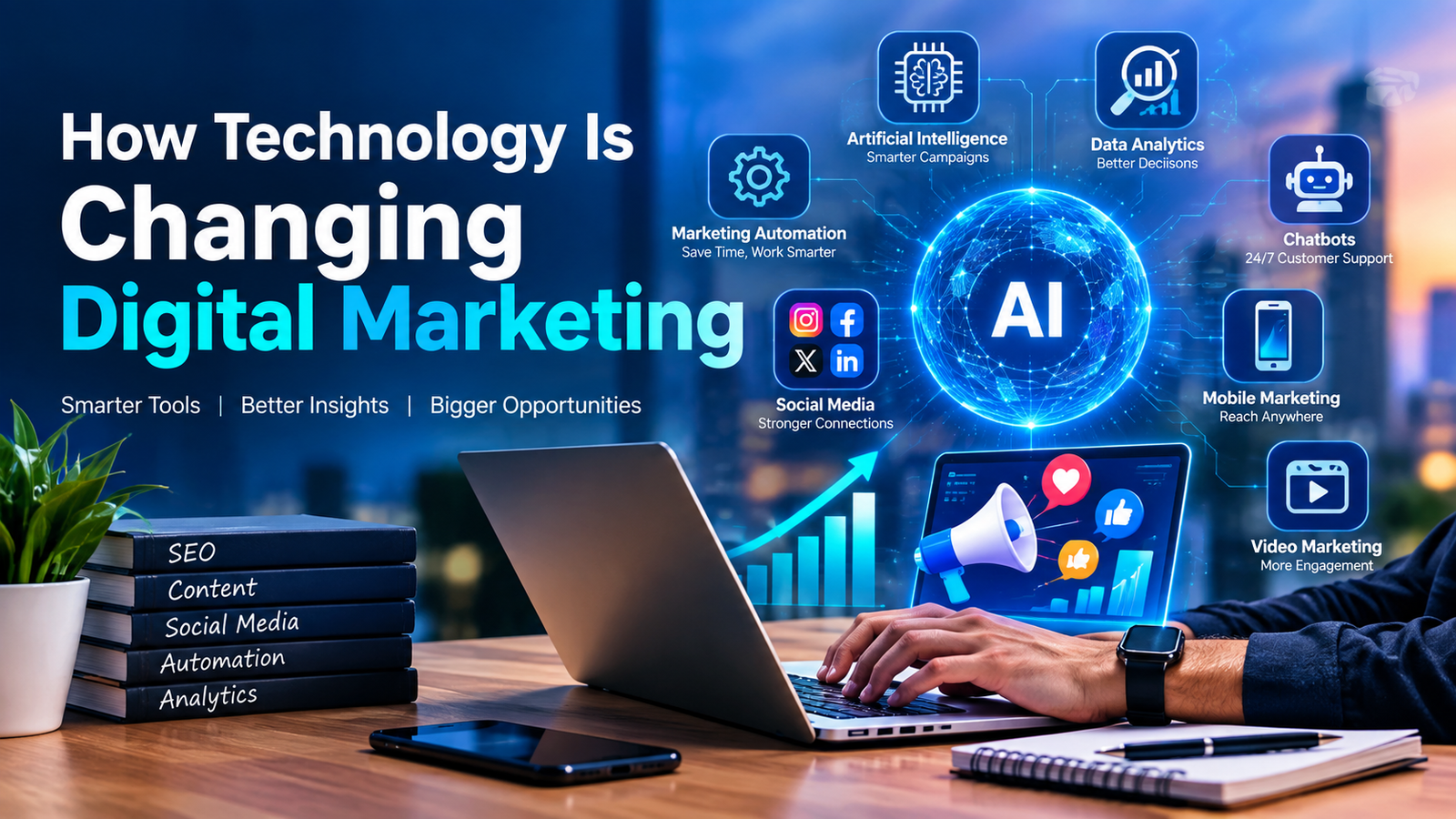
Technology has changed almost every part of modern life, and digital marketing is one of the areas experiencing the biggest transformation. In the past, businesses mainly depended on newspapers, television, radio, posters, and traditional advertising to reach customers. Today, companies can connect with their audiences through search engines, social media, websites, mobile apps, email, videos, and many other digital channels.
The rapid development of Artificial Intelligence (AI), automation, data analytics, cloud computing, smartphones, and other technologies has made digital marketing faster, smarter, and more personalized. Businesses of all sizes can now use technology to understand customers, create content, measure campaigns, and build stronger relationships with their audiences.
1. Artificial Intelligence Is Transforming Marketing
Artificial Intelligence is one of the most important technologies changing digital marketing. AI can analyze large amounts of information, identify patterns, generate content, and help marketers make data-driven decisions.
AI-powered tools can assist with content creation, customer support, keyword research, advertising, image generation, and campaign optimization. For example, businesses can use AI tools to create ideas for blog posts, social media captions, advertisements, and email campaigns.
AI can also help marketers understand customer behavior. By analyzing previous searches, purchases, website visits, and interactions, businesses can create more relevant marketing experiences.
However, human creativity and judgment remain important. AI-generated content should be reviewed for accuracy, originality, brand voice, and usefulness before being published.
2. Marketing Automation Saves Time
Marketing automation allows businesses to automate repetitive marketing activities. Instead of manually performing every task, marketers can use software to schedule and manage campaigns.
For example, an online store can automatically send a welcome email when someone subscribes to its newsletter. It can also send reminders to customers who add products to their shopping cart but do not complete the purchase.
Automation can be used for email marketing, social media scheduling, customer follow-ups, lead management, and advertising workflows.
This allows marketing teams to spend more time on strategy, creativity, and customer relationships rather than repetitive tasks.
3. Data Analytics Improves Decision-Making
Data has become one of the most valuable resources in digital marketing. Modern analytics tools allow businesses to understand how people interact with their websites, advertisements, social media accounts, and online stores.
Marketers can measure metrics such as website traffic, clicks, conversions, engagement, customer acquisition, and campaign performance.
Instead of simply guessing what customers want, businesses can use data to identify trends and make informed decisions. For example, if analytics show that a particular type of content receives more engagement, a business can create more content around similar topics.
Data analytics also helps marketers identify which campaigns are producing useful results and where improvements may be needed.
4. Personalization Creates Better Customer Experiences
Technology has made personalized marketing easier. Customers increasingly expect brands to provide information and offers that are relevant to their interests.
Businesses can use customer data and AI-powered systems to personalize emails, product recommendations, advertisements, and website experiences.
For example, an e-commerce website may recommend products based on a customer’s previous browsing or purchasing behavior. Streaming and content platforms can also suggest content based on user activity.
Personalization can make marketing messages more relevant, but businesses must handle customer information responsibly and respect privacy requirements.
5. Social Media Marketing Is Becoming More Advanced
Social media platforms have become important channels for businesses to communicate with customers. Technology has made it possible for brands to publish content, communicate with followers, run advertisements, analyze performance, and collaborate with creators from one platform.
Short-form videos, live streams, stories, interactive posts, and user-generated content have created new ways for businesses to reach audiences.
Social media analytics can show marketers which posts receive views, likes, comments, shares, and other forms of engagement. This information can help businesses improve their content strategies.
6. Mobile Technology Is Changing Customer Behavior
Smartphones have transformed the way people discover businesses and products. Customers can search for information, compare prices, watch videos, read reviews, and make purchases from almost anywhere.
As a result, businesses need to make their websites and marketing campaigns mobile-friendly. Mobile advertising, apps, SMS marketing, mobile payments, and location-based services are becoming important parts of the digital customer journey.
A website that loads slowly or is difficult to use on a smartphone can create a poor user experience. Therefore, mobile optimization is an important part of modern digital marketing.
7. Chatbots Are Improving Customer Support
Chatbots are another technology changing digital marketing. AI-powered chatbots can communicate with website visitors and answer common questions at any time.
They can help customers find products, provide basic information, collect leads, and guide users through simple processes.
Chatbots can reduce response times and provide support outside normal business hours. However, complex or sensitive customer issues may still require assistance from a human representative.
The combination of automation and human support can create a more complete customer-service experience.
8. Video Marketing Is Growing
Technology has made video creation and distribution easier than ever. Businesses can now create professional-looking videos using smartphones, editing software, and AI-powered tools.
Videos can be used for product demonstrations, tutorials, customer testimonials, educational content, advertisements, and brand storytelling.
Platforms such as YouTube and social media services have made video an important part of online marketing. Short-form videos are particularly useful for attracting attention and communicating information quickly.
9. Voice Search and Smart Devices
Voice technology is also influencing the way people search for information. Smartphones, smart speakers, and voice assistants allow users to search using natural spoken language.
This creates new considerations for search engine optimization. Businesses can create useful, conversational content that answers common questions clearly.
Local businesses can also benefit from optimizing their online information so customers can more easily discover their services through local and voice-based searches.
10. Cloud Technology Supports Modern Marketing
Cloud computing allows businesses to store, access, and manage data and software through internet-based systems. Marketing teams can collaborate on campaigns, documents, customer information, and analytics without always relying on a single physical computer.
Cloud-based tools also make it easier for remote teams to work together. Businesses can use online platforms for customer relationship management, email marketing, analytics, content management, and project management.
11. The Future of Digital Marketing
The future of digital marketing will continue to be influenced by technological innovation. AI, automation, data analytics, augmented reality, virtual experiences, and other emerging technologies may create new opportunities for businesses.
At the same time, technology alone will not guarantee successful marketing. Businesses will still need valuable content, creative ideas, strong branding, customer trust, and a clear understanding of their target audience.
Privacy and responsible data use will also become increasingly important. Companies that use technology responsibly and provide genuine value to customers can build stronger long-term relationships.
Conclusion
Technology is changing digital marketing by making it more automated, data-driven, personalized, interactive, and accessible. Artificial Intelligence can support content creation and analysis, automation can save time, analytics can improve decision-making, and mobile and social technologies can help businesses connect with customers in new ways.
For businesses, adapting to technological change is becoming an important part of digital marketing. The most effective approach is not simply to use every new technology available, but to choose tools that solve real problems and improve the customer experience.