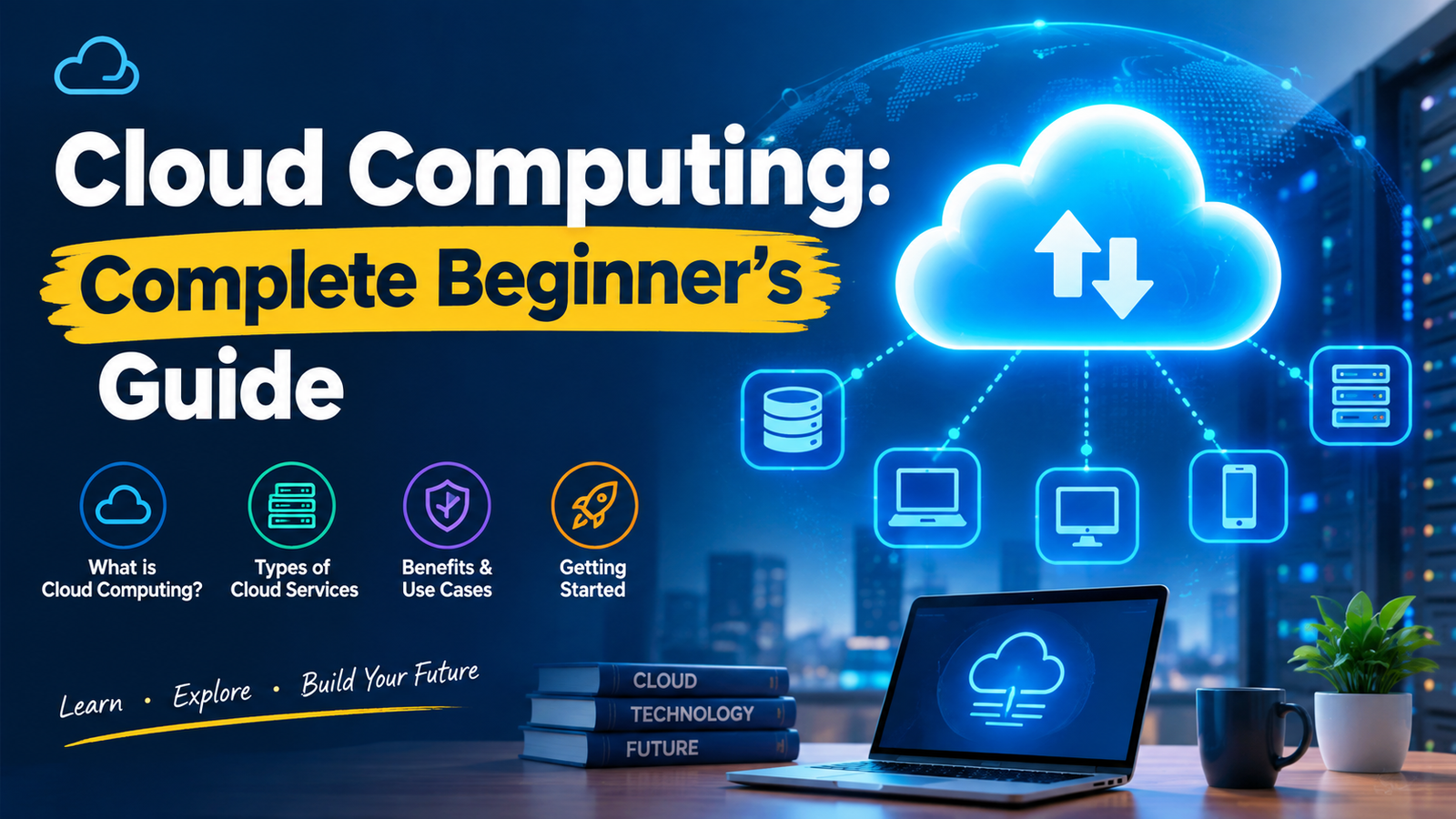
Cloud Computing: Complete Beginner’s Guide
Cloud computing has become an important part of modern technology. From storing photos online to using business applications and streaming videos, people use cloud services every day, often without realizing it. For beginners, cloud computing may sound complicated, but the basic idea is simple: cloud computing allows you to use computing resources over the internet instead of depending entirely on your own computer or physical servers.
In this complete beginner’s guide, we will understand what cloud computing is, how it works, its major types, benefits, and some common examples.
What Is Cloud Computing?
Cloud computing is the delivery of computing services through the internet. These services can include storage, servers, databases, networking, software, and processing power.
Traditionally, if a company needed to store large amounts of data, it had to purchase physical servers and maintain them. With cloud computing, the company can rent computing resources from a cloud provider and access them through the internet.
For example, services such as online file storage allow users to save their files on remote servers and access them from different devices. This means you don’t always need to carry a physical storage device with you.
How Does Cloud Computing Work?
Cloud computing works through a combination of internet connectivity, data centers, servers, storage systems, and virtualization technologies.
Cloud providers operate large data centers containing powerful computers and storage systems. Users can access these resources remotely through the internet.
When you upload a file to a cloud storage service, the data is transferred through the internet to servers operated by the provider. You can later access the same file using another computer, smartphone, or tablet by logging into your account.
Cloud systems can also automatically provide additional resources when demand increases. This makes cloud computing useful for websites, applications, businesses, and organizations that need flexible computing power.
Types of Cloud Computing
Cloud computing can generally be divided into three major service models.
1. Infrastructure as a Service (IaaS)
IaaS provides basic computing infrastructure such as virtual machines, storage, and networking. Instead of purchasing physical hardware, businesses can rent infrastructure from a cloud provider.
IaaS is commonly used by companies that want greater control over their computing environment.
2. Platform as a Service (PaaS)
PaaS provides a platform that developers can use to build, test, and deploy applications. Developers don’t need to manage every part of the underlying hardware and operating system.
This allows developers to focus more on writing and improving their applications.
3. Software as a Service (SaaS)
SaaS provides software applications through the internet. Users generally access the software through a web browser or application without installing and maintaining the entire system themselves.
Email platforms, online office applications, project-management tools, and many other web-based applications are examples of the SaaS model.
Deployment Models of Cloud Computing
Cloud environments can also be categorized by how they are deployed.
Public Cloud: Resources are provided by a cloud service provider and shared among multiple customers.
Private Cloud: Cloud infrastructure is dedicated to a particular organization and can provide greater control over the environment.
Hybrid Cloud: Hybrid cloud combines public and private cloud environments. Organizations can use both depending on their requirements.
Benefits of Cloud Computing
Cloud computing offers several important advantages.
Lower Hardware Costs: Businesses may reduce the need to purchase and maintain large amounts of physical hardware.
Scalability: Cloud resources can often be increased or decreased according to demand.
Accessibility: Cloud-based services can be accessed from different locations and devices when an internet connection is available.
Backup and Recovery: Cloud storage and backup systems can help organizations protect important data and recover it after certain failures.
Faster Deployment: Businesses can quickly create computing resources and launch applications without waiting for physical hardware installation.
Collaboration: Cloud-based applications make it easier for teams to share files and work together remotely.
Common Examples of Cloud Computing
You may already use cloud computing every day. Online file storage, web-based email, video streaming platforms, online document editors, photo backups, and many business applications rely on cloud infrastructure.
For example, when you save a document online and later open it from your smartphone, the document is typically being stored on remote infrastructure rather than only on your personal computer.
Is Cloud Computing Secure?
Cloud computing can provide strong security features, but security is not automatic. Cloud providers generally offer tools such as encryption, identity management, access controls, monitoring, and backup options.
Users and organizations must still follow good security practices. Strong passwords, multi-factor authentication, proper permissions, software updates, and regular backups can help reduce security risks.
How Can Beginners Start Learning Cloud Computing?
Beginners can start by learning basic computer networking, operating systems, databases, and internet concepts. After understanding these fundamentals, you can explore cloud platforms and learn about services such as virtual machines, storage, databases, networking, and cloud security.
Practical projects can also be useful. For example, a beginner could create a simple website, store files in cloud storage, or deploy a basic application to understand how cloud services work.
Conclusion
Cloud computing has changed the way individuals and businesses use technology. Instead of relying completely on physical computers and servers, users can access computing resources through the internet whenever they need them.
Understanding concepts such as IaaS, PaaS, SaaS, public cloud, private cloud, and hybrid cloud provides a strong foundation for beginners. As businesses continue to use digital technologies, cloud computing knowledge can also be valuable for students, developers, IT professionals, and digital businesses.